


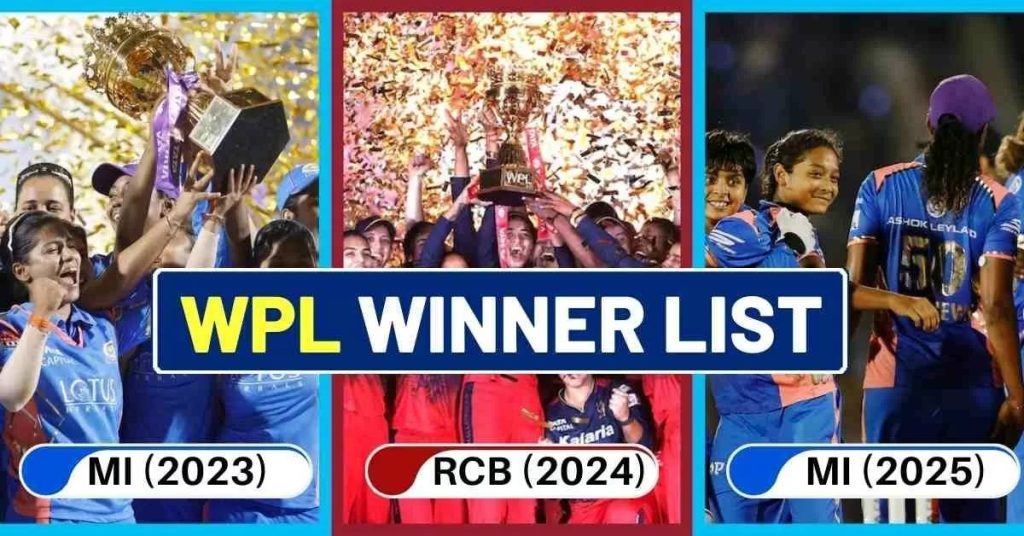
The Women’s Premier League is still young, yet it has already reshaped how franchises think about team building, leadership, scouting, and the rhythm of modern T20 cricket. Two seasons were enough for the WPL winners to set new templates that other teams across WPL, IPL, PSL, SA20, BBL, CPL and even emerging leagues like MLC have started to study closely. What began as bold experiments by the winning sides has now become a new vocabulary for T20 strategy.
The WPL may feature fewer teams and a shorter window, but the clarity with which its champions have played has made the league an influential testing ground. Lessons learned here travel across formats, knocking on the doors of established men’s franchises that once relied on older playbooks. Even Indian Premier League winners have begun to acknowledge how the WPL’s sharp, modern approach to team building offers ideas that can refresh their own strategies. The WPL has shown that innovation is not tied to history, budgets, or fan bases; it is tied to decisiveness, vision, and the courage to trust data as much as intuition.
This article looks at those early lessons in detail, weaving together analysis, storytelling, and proven patterns that franchises worldwide have already begun copying.
The Rise of Data Driven Drafting and the Death of Reputation Picks:
When the WPL began, teams faced the same dilemma familiar to IPL sides in earlier years: Should they invest in established stars, or search for undervalued specialists who match their game plan? The early winners answered this with clarity: reputation means little unless it fits a tactical purpose.
Instead of loading the squad with marquee names, champions focused on what T20 actually rewards: high impact skills in short bursts. Their scouting teams looked at strike rates in specific phases, bowling control under scoreboard pressure, and consistency on slow surfaces. These were not headline metrics but micro-patterns.
A senior analyst at a top franchise described the shift as “moving from collecting players to assembling roles.” This thinking soon spread. Today, PSL teams are using similar evaluation systems for powerplay bowlers. BBL scouts, too, are digging deeper into second-layer analytics like match-up efficiency and fielding impact per ball.
WPL winners have shown that data does not replace intuition; it sharpens it. And that is the lesson others now borrow.
Role Clarity Over Star Power: A Blueprint That Travels Across Leagues
What stands out most when you watch a WPL champion side is not one superstar carrying the team, it is how each player knows her exact role. A finisher does not drift to a stabilizing role. A powerplay bowler does not suddenly experiment in the death unless conditions demand it.
Clarity gives comfort, and comfort gives confidence something visible in how the top WPL sides rotate their players.
This principle, once associated with IPL dynasties like Chennai Super Kings and Mumbai Indians, now finds even sharper expression in the WPL. The format rewards specialization, and the champions embraced it early.
The shift has inspired global adoption. In SA20, Pretoria Capitals built bowling units based on very defined roles. In CPL, teams now maintain specialist power hitters at positions five and six, instead of squeezing them higher. And in the 2025 IPL, several mid-table teams redesigned their squads after realizing that star-heavy lineups without clarity often crumble under pressure.
| Phase | Key Responsibility | Player Profile Used by WPL Winners |
|---|---|---|
| Powerplay | Aggressive scoring or swing bowling | Top-order hitters and seamers with ball movement |
| Middle Overs | Strike rotation or quick breakthroughs | Wrist spinners, middle-order anchors |
| Death Overs | Controlled aggression or yorker specialists | Finishers, high-pace bowlers |
This framework is now mirrored in league after league, a direct influence of WPL champions.
Investing in Young Domestic Talent Before the World Notices:
One of the most repeated lessons from WPL winners is that young Indian players truly become world-class only when they are trusted early. The WPL created a stage where uncapped players could suddenly be asked to bowl the 19th over or walk in at number three in a chase.
These were not cosmetic experiments. They were deliberate decisions rooted in the belief that pressure accelerates growth.
Stories emerged of domestic players sharing how a single big moment changed their career path. A young opener once said she understood her true potential only when the coaching staff backed her to take on the opposition’s strike bowler in the powerplay. Moments like these deepen a team’s bench strength far beyond what budget can buy.
By 2024 and 2025, IPL scouts were travelling to WPL games not just to observe overseas stars but to study how young Indian players handled pressure moments. Many analysts say this shift happened because the WPL showed how strong domestic talent can become when given trust early. During this period, several IPL betting apps also highlighted WPL breakout performers in their match previews and player highlight sections, which increased attention on these emerging players even more.
Some IPL teams even studied WPL winners’ training loads, recovery windows, and mental conditioning programs to understand how these systems were producing calm, confident athletes. A few franchises quietly adopted similar routines in their pre-season camps.
Other leagues soon began copying this early-trust model. In the Big Bash League, franchises started giving top-order positions to young Australian batters instead of hiding them at number seven. In Major League Cricket, coaches openly said their development pathways were inspired by WPL success stories where domestic players were backed from the start.
The WPL proved something important: trusting young talent early is not a gamble it is one of the smartest decisions a franchise can make.
Flexible Captaincy: The New Age of Shared Decision Making
The leadership style of WPL champions quietly shifted the conversation in T20 cricket. Instead of relying on one authoritative figure, they built leadership groups. In timeouts, field settings, and transitions between overs, responsibility was distributed.
This model borrowed elements from football coaching structures, where captains act as extensions of coaches, not owners of every decision.
When a team wins with such a structure, others take notice.
By 2025, IPL franchises began rethinking captaincy profiles. Leadership was no longer about personality alone; it was about adaptability, openness to data, and a willingness to let bowlers call their own fields. Several teams in PSL and SA20 also embraced this philosophy, adding tactical analysts to dugouts who communicate real-time prompts.
The WPL showed that leadership in modern T20 cricket is less about one voice and more about a shared brain.
Fitness, Fielding, and the Hidden Runs That Change Seasons:
One of the under-discussed strengths of WPL winners is their fielding. Their athleticism reduced boundaries, converted singles into dots, and turned half-chances into turning points.
A coach once said that every WPL title run includes “twelve to fifteen invisible runs per match” created purely through fielding intensity.
Fitness programs in WPL camps prioritized mobility, sprint clearance, and reaction drills. These would have been seen as secondary in earlier eras, but champions treated fielding as their competitive advantage.
This influence has reshaped other leagues. CPL sides are increasingly hiring fielding coaches from women’s cricket. IPL franchises now pay closer attention to sprinting metrics in trials. SA20 teams explicitly mention fielding value in auction notes.
The lesson was simple: in T20 cricket, the best fielding team often becomes the best overall team.
The Calm Middle Overs: Why WPL Champions Avoid Mid-Innings Panic
T20 cricket is known for its chaos, but WPL winners have shown that controlled middle overs can anchor entire campaigns. Rather than chasing every ball, they use this phase to reclaim structure, rotating strike, targeting specific bowlers, and avoiding collapses.
This discipline reflects the maturity of their batting groups and the clarity in their tactical plans.
Men’s leagues quickly noticed. The 2025 IPL season saw a dip in reckless middle-overs hitting across teams that studied WPL patterns. T20 World Cup sides also borrowed this rhythm, especially when setting totals on slower pitches.
The WPL taught that chaos may entertain, but structure wins tournaments.
The Power of Continuity – Trusting the Same Core Even After Losses:
Franchises often react strongly after one or two bad games. They shuffle the batting order, replace players, or panic during selection meetings. WPL champions rejected this approach. They backed their core group even in tough phases.
This continuity builds emotional stability within the team. A player walks in knowing she will not be dropped for one failure. The resulting confidence becomes a competitive advantage in tight contests.
The influence has spread. In 2025, several IPL teams retained larger cores. PSL and BBL franchises began formalizing retention cycles. Analysts now argue that WPL champions demonstrated how continuity strengthens high-pressure teams far more than constant churn.
How WPL Winners Use Overseas Players Differently?
Unlike some leagues that rely heavily on overseas stars, WPL champions used them with precision as specialists rather than saviors. An overseas player was assigned a narrow, high-impact job: opening burst bowler, middle overs enforcer, or finishing batter.
This freed domestic players to carry major roles, deepening the squad’s overall flexibility.
Global leagues soon adopted this narrowed-role approach. In SA20, franchises began recruiting overseas players for specific phases instead of full-game dominance. In the Caribbean Premier League, a few teams started modeling their overseas picks on WPL patterns, especially for spin-all-rounders who shape slow surfaces.
The takeaway: overseas players should strengthen the system, not overshadow it.
Auction Strategy: Clear Vision Beats Big Budgets
WPL auctions became a masterclass in restraint. Champions avoided bidding wars unless a player fit their exact blueprint. They passed on several popular names, but every purchase aligned with a long-term vision.
Their philosophy: spend boldly, but spend with purpose.
A comparison of auction strategy styles shows this clearly:
| Approach | Teams Still Following Old Patterns | Approach Used by WPL Winners |
|---|---|---|
| Spending logic | Buy star names first | Buy essential roles first |
| Squad design | Fill as auction progresses | Build backward from roles |
| Backup players | Often ignored | Prioritized to maintain role clarity |
| Risk strategy | Emotional bidding | Mathematical risk allocation |
This alignment between planning and spending has inspired IPL and PSL teams to rethink how they approach bidding windows.
Bowling Plans Built Around Match Ups, Not Traditional Roles:
One of the sharpest innovations of WPL champions was their match-up based bowling. They analyzed batters’ weaknesses, pitch behavior, wind direction, and short boundary dimensions before committing to a plan.
Instead of rigidly following “pace upfront, spin in the middle,” they flipped orders based on opponents.
This match-up thinking is now visible in men’s leagues. Teams across BBL, SA20, and IPL are building entire bowling units around compatibility with specific opposition batters.
The WPL proved that flexibility is not a luxury, it is a requirement for success.
Mental Conditioning: The Five Percent Edge That Separates Winners
The WPL introduced a level of mental coaching rarely seen in early years of men’s leagues. Champions worked with sports psychologists to prepare players for short-tournament pressure. Journaling, visualization, and decision-stress training were regular parts of camp.
The results were visible in how calmly they chased targets, defended low totals, and handled finals.
This mental-conditioning focus is now spreading across leagues. IPL teams have added cognitive specialists to their staff. PSL franchises speak openly about decision fatigue. Even T20 World Cup sides borrow elements of the WPL model to prepare young players for global pressure.
The women’s game showed that mental strength is not abstract, it is trainable.
Franchise Identity: How WPL Champions Created a Culture, Not Just a Team
Winning teams in the WPL built something deeper than a squad they built an identity. Their communication style, training methods, tactical decisions, and match culture all fit a clear idea of who they wanted to be.
One team focused on expressive attacking cricket. Another built its brand on discipline and execution. Another emphasized fearless youth. These identities guided every decision.
Franchises worldwide are now studying how WPL winners built cultures strong enough to withstand pressure. Even IPL teams, with their large budgets and huge fan bases, have started refining their cultural identities to avoid drift.
Culture, the WPL proved, is a competitive resource.
Conclusion:
The Women’s Premier League may be new, but its influence is deep. The lessons its champions teach clarity, flexibility, culture, youth investment, and tactical intelligence are shaping the future of T20 cricket across continents.
Franchises in every major league now borrow elements from WPL success stories because they recognize something essential: the women’s game has unlocked strategic clarity that the men’s game, with all its history, sometimes overlooks.
The WPL is no longer a developing league. It is a blueprint. A guidebook. A global classroom.
And the winners of its early seasons have become pioneers whose ideas will influence T20 cricket for years to come.