
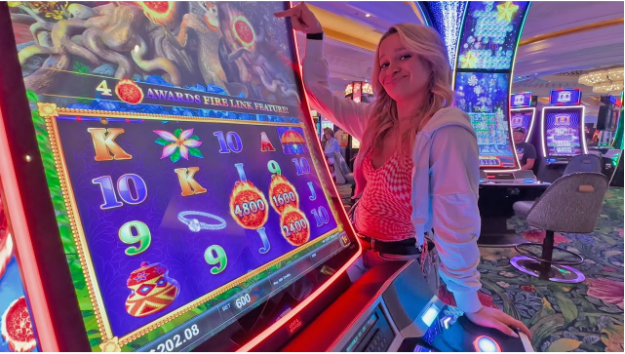
Introduction to Slots
If you’ve ever stepped into a casino, browsed an online gambling site, or even watched a movie set in Las Vegas, chances are you’ve seen a slot machine. Bright lights, spinning reels, catchy sounds, and the promise of instant excitement slots are everywhere. But what exactly is a slot, and why do so many people, especially beginners, find them so appealing?
At its core, a situs 4d is a game of chance. You place a bet, spin the reels, and hope the symbols land in a winning combination. Sounds simple, right? That simplicity is precisely why slots are often the first game new players try. Unlike poker or blackjack, there’s no complex strategy to memorize, no opponent to outsmart, and no pressure to perform. You just spin and see what happens.
Slots also tap into something deeply human: our love for surprise and reward. Every spin feels like opening a mystery box. Will it be a small win, a big win, or nothing at all? That anticipation is what keeps players engaged. For beginners, slots offer a low barrier to entry and a fast-paced experience that’s easy to understand but hard to put down.
In this complete beginner’s guide, we’ll break down everything you need to know about slots—from their history and how they work to the different types, features, and tips for playing smart. By the end, you’ll not only know what a slot is, but you’ll also feel confident enough to spin your first reel with clarity instead of confusion.
History of Slot Machines
To truly understand what a slot is today, it helps to look back at where it all began. Slot machines didn’t just appear overnight in flashy online casinos. Their story starts over a century ago, rooted in mechanical ingenuity and a simple desire for entertainment.
The first-ever slot machine was invented in the late 1800s by Charles Fey, a mechanic from San Francisco. His creation, known as the Liberty Bell, featured three spinning reels and five symbols: horseshoes, diamonds, spades, hearts, and a cracked Liberty Bell. When three Liberty Bells lined up, players won the highest payout. Compared to today’s slots, it was incredibly basic, but at the time, it was revolutionary.
As the popularity of these machines grew, bars and saloons began installing them as a way to attract customers. Early slots often paid out in chewing gum, drinks, or cigars instead of cash to get around gambling laws. That’s also why fruit symbols like cherries and lemons became common—those symbols represented gum flavors, a design choice that still influences slot aesthetics today.
Fast forward to the 20th century, and technology began to change everything. Mechanical slots evolved into electromechanical machines, allowing for more complex gameplay and bigger payouts. Then came the digital age. Video slots replaced physical reels with screens, opening the door to animations, themes, bonus rounds, and immersive experiences.
The biggest shift happened with the rise of the internet. Online slots brought the casino experience directly to players’ homes. Suddenly, you didn’t need to travel to a casino to spin the reels. With just a few clicks, you could access thousands of different slot games, each with unique themes, features, and jackpots.
Today, slots are a blend of history and innovation. While the core idea remains the same—spin and win—the technology behind modern slot gacor gampang menang is more advanced than Charles Fey could have ever imagined.
How Slot Machines Work
At first glance, slot machines might seem like pure magic. You press a button, the reels spin, and somehow the machine decides whether you win or lose. But behind the flashing lights and sound effects lies a surprisingly structured system.
The most important thing to understand is that modern slots operate using something called a Random Number Generator, or RNG. An RNG is a computer program that continuously generates random numbers, even when the machine isn’t being played. When you hit the spin button, the RNG instantly selects a set of numbers that correspond to specific symbols on the reels. The result is completely random and independent of previous spins.
This means one crucial thing for beginners to remember: slot machines have no memory. If you’ve just lost ten spins in a row, the next spin is not “due” for a win. Likewise, if you’ve just won big, the machine isn’t trying to “take your money back.” Each spin is a fresh, independent event.
The reels you see on the screen are essentially a visual representation of the RNG’s outcome. In traditional slots, these reels physically spun. In modern video slots, they’re digital animations designed to make the experience more engaging.
Another key aspect is paylines. A payline is the pattern across the reels that determines winning combinations. Some slots have just one payline, while others can have hundreds or even thousands. When matching symbols land on an active payline, you win according to the game’s paytable.
Understanding how slots work doesn’t mean you can predict outcomes, but it does help you play with realistic expectations. Slots are designed for entertainment first, with randomness built into their core.
Key Components of a Slot Machine
Every slot machine, whether online or in a physical casino, is built from the same fundamental components. Once you understand these parts, slots instantly become less intimidating and much more enjoyable.
Reels and Rows Explained
Reels are the vertical columns that spin when you play a slot. Most classic slots have three reels, while modern video slots typically feature five or more. Rows refer to how many symbols appear vertically on each reel. A common setup is five reels with three rows, but many variations exist.
The number of reels and rows affects how many possible symbol combinations a slot can produce. More combinations usually mean more variety in gameplay and payouts, which is why modern slots feel more dynamic than older machines.
Symbols and Their Meanings
Symbols are the images that appear on the reels. These can range from simple fruits and numbers to characters, objects, and icons tied to a specific theme. Each symbol has a different value, with some paying more than others when matched.
Paylines and Wins
Paylines are the lines across the reels that determine winning combinations. These lines can be straight, zigzagged, or even shaped in creative patterns. You only win when matching symbols land on an active payline, which is why understanding paylines is essential for beginners.
Together, reels, symbols, and paylines form the backbone of every slot machine. Once you grasp these basics, the rest of slot gaming starts to fall into place.
Types of Slot Machines
One of the reasons slots remain so popular is the sheer variety available. There’s truly a slot for everyone, no matter your taste or experience level.
Classic Slots
Classic slots are inspired by the original mechanical machines. They usually feature three reels, simple symbols like fruits and bars, and minimal bonus features. These slots are perfect for beginners who want a straightforward, no-frills experience.
Video Slots
Video slots are the most common type today. They typically have five reels, multiple paylines, and a wide range of themes. From ancient civilizations to movies and fantasy worlds, video slots turn spinning reels into a storytelling experience.
Progressive Jackpot Slots
Progressive slots offer jackpots that grow over time. A small portion of each bet contributes to the jackpot, which can reach life-changing amounts. While these slots are exciting, they often require larger bets and come with higher risk.
3D and Themed Slots
3D slots take immersion to the next level with advanced graphics, animations, and interactive bonus rounds. These slots feel more like video games than traditional casino games, making them especially appealing to younger players.
Each type of slot offers a unique experience, so beginners should experiment to find what they enjoy most.